Skip to content
GEOMECHANICALServices & Innovations Inc.

Rock mechanics consulting

Geomechanics for underground mine design.

Understanding rock mass behaviour, excavation stability and in-situ stress to inform engineering decisions.

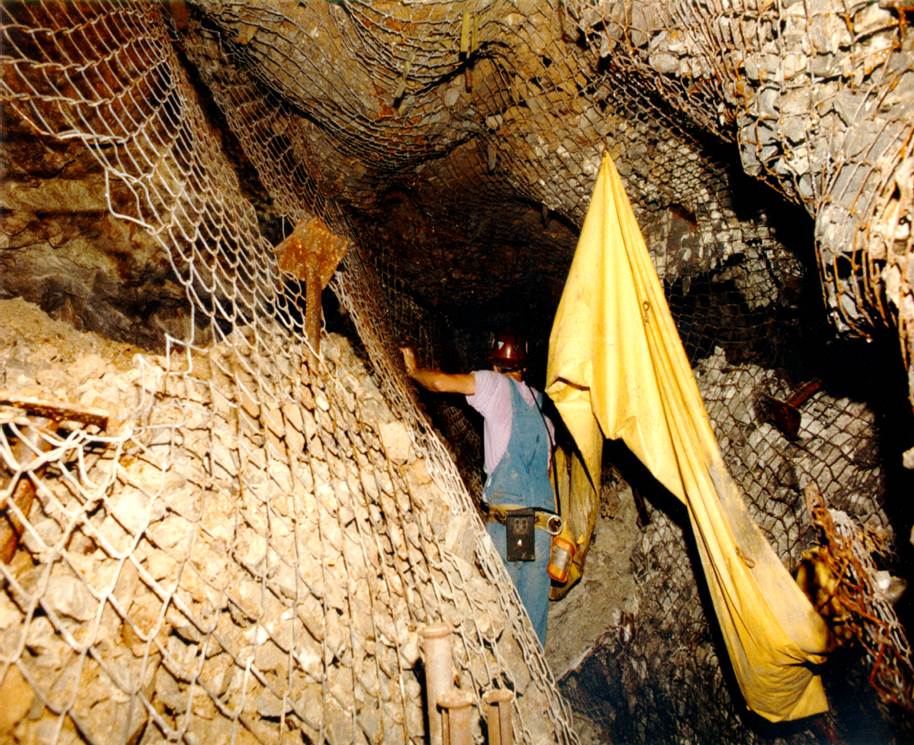
Archival view of rockburst damage in an underground excavation, U.S. Bureau of Mines
Rockburst damage · U.S. Bureau of Mines, 1990 archive.
Context image, not a Geomechanical project.

Geomechanical services

Specialist analysis and design, from site conditions to excavation planning.

Numerical Modeling

Assess rock mass response to excavation and changing stress conditions.

Service scope

Numerical modeling supports the assessment of excavation stability, stress redistribution and mining sequences. The analysis is considered in the context of site conditions and design questions.

Rock mass response · Stress redistribution · Excavation stability

Read the full service page

Static and Dynamic Ground Support Design

Consider both static loading and dynamic demand in underground support design.

Service scope

Ground conditions and loading requirements inform the assessment of support systems for underground excavations. Static and dynamic demands are considered as part of the engineering question.

Underground support · Static loading · Dynamic demand

Read the full service page

Microseismicity Analysis and Re-entry Protocols

Interpret seismic response to inform re-entry decisions after mining activity.

Service scope

Microseismic observations provide information about how the rock mass responds to mining. Analysis can inform re-entry protocols and assessment of exposure following seismic activity.

Rock mass response · Seismic activity · Re-entry planning

Read the full service page

Open Stoping Design

Evaluate stope geometry and rock mass conditions for excavation stability.

Service scope

Geomechanical assessment considers the relationship between stope geometry, ground conditions and the mining sequence to support open stoping design.

Stope geometry · Ground conditions · Mining sequence

Read the full service page

Mine Design

Integrate geomechanical understanding into excavation layouts and sequencing.

Service scope

Site characterization and engineering parameters inform mine design decisions. Geomechanical input connects the rock mass assessment with excavation layout and sequencing questions.

Excavation layout · Engineering parameters · Sequencing

Read the full service page

Backfill Design

Assess backfill requirements within the mining method and excavation design.

Service scope

The mining method, neighbouring excavations and support requirements provide the context for backfill design. Engineering assessment considers fill performance as part of the broader mine plan.

Fill requirements · Excavation support · Mine integration

Read the full service page

Site assessment & review

Site Characterization

Establish the ground conditions that inform analysis and design.

Site Inspection

Review conditions and observations at the project site.

Ground Control Audit

Review ground control practices and their engineering context.

Start with the ground conditions.

Rock mass characteristics and stress conditions are fundamental to an engineering assessment.

We connect site understanding with engineering and design parameters, including the magnitudes and orientation of in-situ stress. Our work supports underground mines as well as civil, infrastructure, and oil and gas projects.

Our approach

Driven by excellence. Guided by integrity. Inspired by innovation.

Research in development

Measuring in-situ ground stress

How large are the stresses in the rock, and in which directions do they act?

We are developing a method for ground stress measurement that includes direction. Better characterization of the stress state can inform engineering questions in mining and rockburst assessment, with potential applications in nuclear waste storage and carbon sequestration.

Magnitude
The size of the stress acting within the rock.
Orientation
The directions in which principal stresses act.

Development-stage research. Performance results are not presented here.

Principles of our practice

Excellence, safety, innovation, sustainability, collaboration, and continuous improvement guide our work.

Discuss your engineering question.

Tell us about your site, your project stage, and the decision you need to make.

Contact our team

Share your site, project stage and engineering question.